
 EN
EN


Still struggling with curtain pleats, installation, and fabric ratios? A 25-year factory expert decodes all the styles for you with 6 key questions — no more confusion after reading.
Question 1: Why is choosing the right curtain processing style more important than choosing the right fabric?
As a curtain factory with 25 years of experience, we've seen too many clients: they spent a high price on good fabric, but because the style was chosen incorrectly,
the final effect was greatly diminished. The processing style of a curtain directly determines:
1. Final Aesthetics: Is it sharp and structured, or naturally casual?
2. Installation Method: Is it grommet, hook, or rod pocket?
3. User Experience: Does it open and close smoothly? Is it easy to clean?
4. Space Compatibility: Is it suitable for a curtain rod or a track? Can it cover unsightly window frames?
You could say, fabric is the "skin" of the curtain, while the processing style is its "skeleton." Today, we'll use 6 key questions to help you understand all the mainstream styles on the market.
Question 2: What are the most common curtain styles on the market? What are their characteristics?
We categorize them into 6 major types. You can quickly understand them from the table below:
|
Style Type |
Core Characteristic in One Sentence |
Visual Style |
|
Grommet |
Directly threads onto the rod, creating even, neat pleats. |
Modern, Minimalist |
|
Hook Style (Prong Hook) |
Freely adjustable height and pleat density, the versatile choice. |
Classic, Universal |
|
Pleated Style (Korean Pleat) |
Pleats are fixed, hooks are pre-attached at the factory, ready to hang. |
Luxury, Refined |
|
Rod Pocket |
Fabric pocket slides onto the rod, creating a casual look. |
Rustic, Relaxed |
|
Tie-Top / Tab-Top |
Hung using fabric ties or loops, highly decorative. |
Cottage, Cute |
|
S-Fold / Wave Curtain |
Requires a dedicated track system to form regular wave curves. |
Elegant, Artistic |
Question 3: How is each style specifically installed? What are the track requirements?
This is where mistakes happen most easily. Please read carefully:
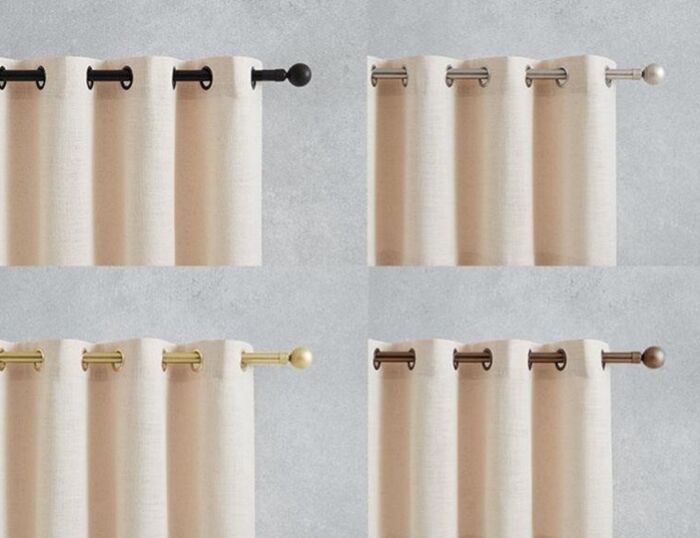
1)Grommet: Must be paired with a round curtain rod. Thread the rod through the top grommets like beads. Difficult to move after installation; requires sturdy rod and bracket support.
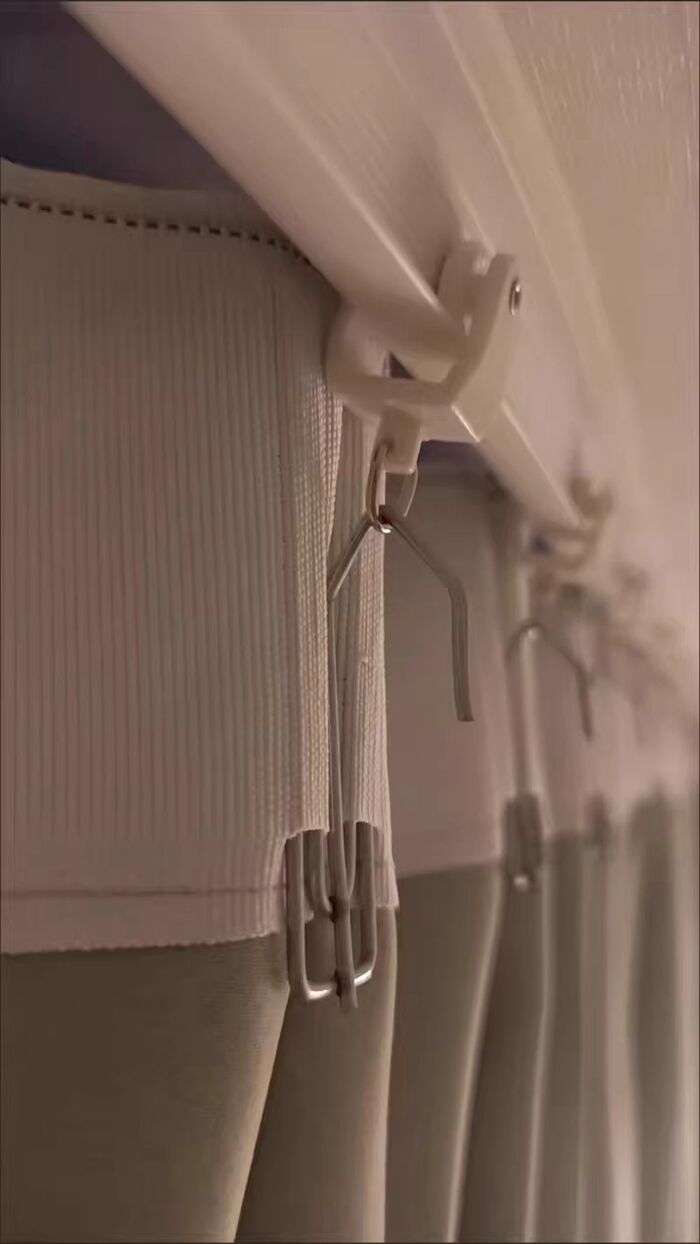
2)Hook Style (Prong Hook): Fits all tracks (straight, bent). Requires you to insert the prong hooks into the top header tape and then hang them on the track gliders. Most flexible, but requires a bit of DIY skill.
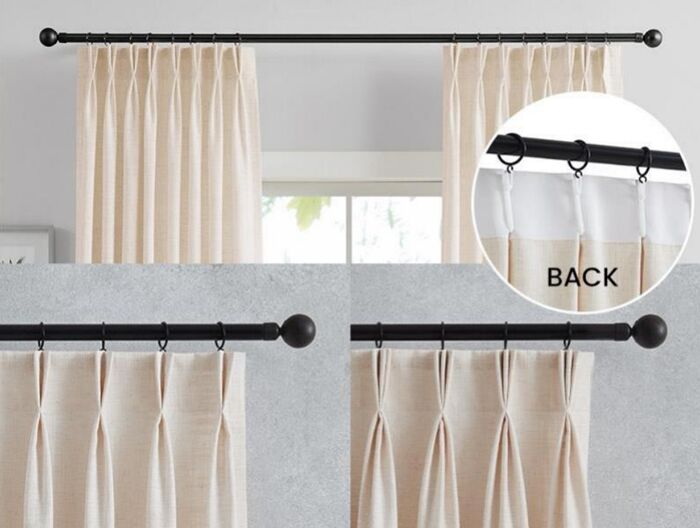
3)Pleated Style (Korean Pleat): Fits all tracks and curtain rods. The factory pre-attaches plastic adjustable hooks to each pleat. You simply hook them onto the track or the rings on a rod. Height is micro-adjustable. Most friendly for beginners.
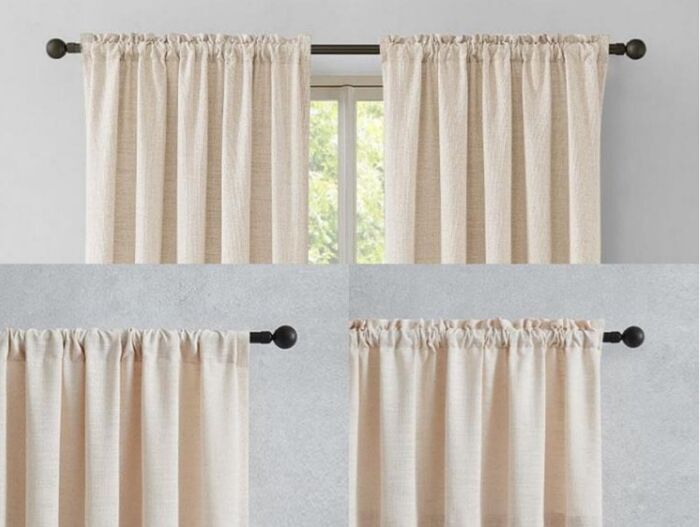
4)Rod Pocket: Must be paired with an exposed decorative rod (wood, metal, etc.). Slide the rod through the top pocket. Requires confirming the rod diameter in advance.
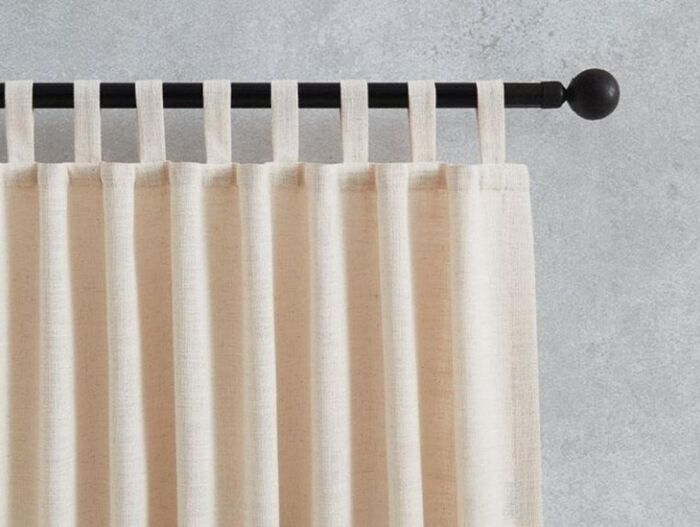
5)Tie-Top / Tab-Top: Suits slender decorative rods. Simply loop or tie the fabric tabs onto the rod. Simple installation, but light seal.
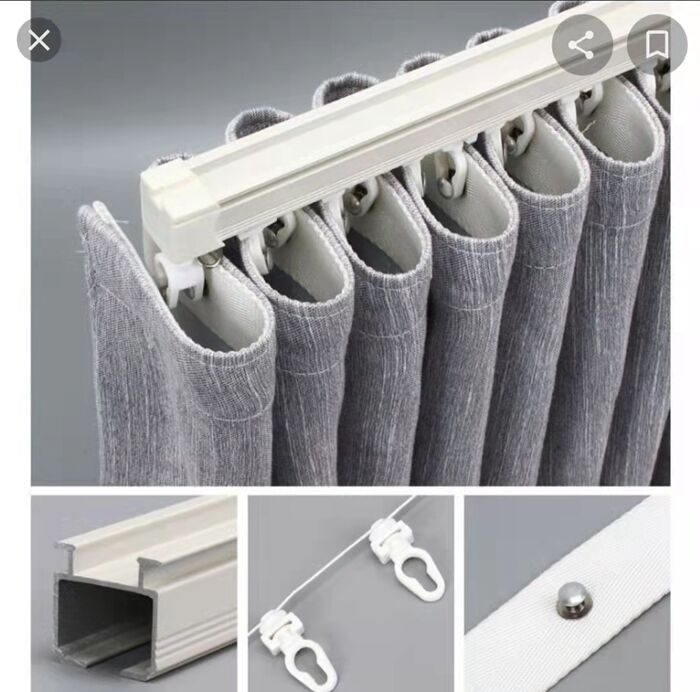
6)S-Fold Curtain: Must purchase the matching dedicated track and pulley system as a set. The curtain attaches via screw buttons on a special tape to specific pulleys on the track, forming the waves. This is a "turnkey" system requiring integrated
purchase.
Question 4: What does "1:2 fullness" mean in curtains? Is the fabric ratio the same for different styles?
"Fabric Ratio" (Fullness) refers to the ratio of the finished curtain width to the window or track width. A higher ratio uses more fabric, resulting in denser, fuller pleats and higher cost.
The optimal ratio is completely different for various styles:
1)Economical (1:1.8 - 2.0): Suitable for Hook Style, Rod Pocket. Pleats are relatively flat.
2)Standard & Aesthetic (1:2.0 - 2.3): Suitable for Grommet, Hook Style. Full effect.
3)Luxury (1:2.5 - 3.0): Essential for S-Fold Curtains and Pleated Style (Korean Pleat) to form three-dimensional pleats or waves.
Special Note: The S-Fold Curtain is a precise system. Its fabric ratio (i.e., "fullness") is determined by the combined specifications of [Pulley Distance] and [Curtain Tape Distance] to achieve the optimal wave effect.
4)Taking our Foulola S-Fold Curtain system as an example, the specific parameter matching is shown in the table below. You can use this as a reference when choosing, but final calculation should be done by professionals based on your window size and selected fabric.
5)Foulola S-Fold Curtain System Parameter Table:
|
Pulley Distance |
Curtain Tape Distance |
Recommended Fabric Ratio (Approx.) |
Min. Box Width for Single Track |
Min. Box Width for Double Track |
|
60MM |
107MM |
1 : 1.8 |
110MM |
220MM |
|
125MM |
1 : 2.1 |
130MM |
260MM |
|
|
145MM |
1 : 2.5 |
150MM |
300MM |
|
|
70MM |
107MM |
1 : 1.6 |
110MM |
220MM |
|
125MM |
1 : 1.9 |
130MM |
260MM |
|
|
145MM |
1 : 2.8 |
150MM |
300MM |
|
|
80MM |
107MM |
1 : 1.4 |
110MM |
220MM |
|
125MM |
1 : 1.6 |
130MM |
260MM |
|
|
145MM |
1 : 1.9 |
150MM |
300MM |
Question 5: Which style is the most hassle-free? Which is the most troublesome to clean?
Ranked by ease of installation and long-term maintenance:
Top 3 for Easiest Installation:
1)Pleated Style (Korean Pleat): Hooks pre-attached at the factory, just hang it up.
2)Tie-Top / Rod Pocket: Simple structure, just slide onto the rod.
3)S-Fold Curtain: Click into the matching track.
(Hook Style requires self-attaching hooks, slightly troublesome for beginners.)
Top 3 for Easiest Cleaning & Maintenance:
1)Pleated Style / Grommet / Rod Pocket / Tie-Top / S-Fold Curtain: Because the pleats or structure of these styles are fixed, the shape remains largely unchanged after washing and drying. Simply hang them back to restore.
2)Hook Style (Prong Hook): Requires re-attaching the hooks after washing, the only style needing hands-on work again.
Question 6: Finally, how should I choose? Can you give direct advice?
Of course! Based on your core needs, find your match directly:
1)Choose Pleated Style (Korean Pleat) if you: Pursue a refined feel, are a renovation novice, want hassle-free installation and cleaning, and have a sufficient budget.
2)Choose Hook Style if you: Need flexible height adjustment (e.g., radiator under the window), don't mind frequent disassembly for washing, or have irregular window sizes.
3)Choose S-Fold Curtain if you: Pursue ultimate design sense and flowing lines, and are willing to invest in the matching track system for the complete effect.
4)Choose Grommet if you: Have a modern, minimalist-style curtain rod at home, and the installation position is final.
5)Choose Rod Pocket / Tie-Top if you: Have a homestay, cafe, or spaces like a children's room or tea room that need a relaxed atmosphere.
Final, honest advice from the factory:
1)Measurement is the top priority! Especially for styles requiring high dimensional accuracy like S-Fold and Korean Pleats, measure repeatedly.
2)Think before you decide: Hook Style is the most forgiving of errors; other styles have strict size requirements.
3)The system determines the effect: S-Fold Curtains require buying the track and curtain together; Grommet must be paired with a curtain rod.
We hope this "Q&A Manual," infused with our 25 years of experience, will clear all your doubts and help you easily choose the perfect curtain for your home.
Table of Contents
- Question 1: Why is choosing the right curtain processing style more important than choosing the right fabric?
- Question 2: What are the most common curtain styles on the market? What are their characteristics?
- Question 3: How is each style specifically installed? What are the track requirements?
- Question 4: What does "1:2 fullness" mean in curtains? Is the fabric ratio the same for different styles?
- Question 5: Which style is the most hassle-free? Which is the most troublesome to clean?
- Question 6: Finally, how should I choose? Can you give direct advice?
- Final, honest advice from the factory:

