 EN
EN

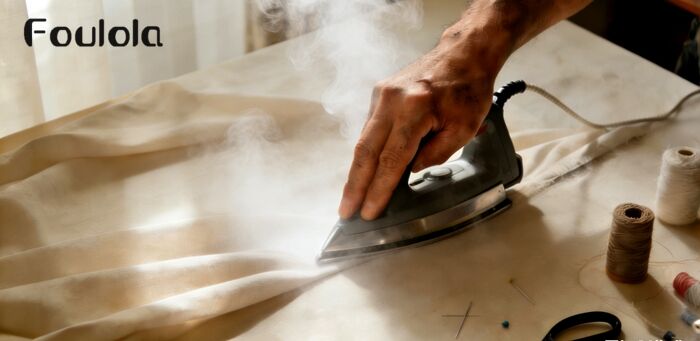
How long has it been since you truly looked at a curtain?
I mean, really looked—observing how light passes through its fibers, how it sways gently in the breeze, how it’s drawn open at dawn and closed again at night.
For twenty-five years at Foulola, we’ve worked with fabric every day. Gradually, we’ve come to realize that a curtain is far more than just cloth.
It is a translator between light and shadow, the breath between inside and outside, the gentlest boundary a home can have.
So what is it that we, as curtain makers, are actually making?
My mentor, Old Chen, worked here for eighteen years. He had a habit—after finishing each curtain,
he would lightly run his palm over the fabric. He said it wasn’t an inspection; it was a “send-off.”
“Every piece of fabric has its journey,” he once told me. “Cotton grows from the earth, linen is soaked in water,
silk is spun by silkworms. All we do is help it find its way to where it belongs, to hang there quietly and simply be a curtain.”
I’ve remembered those words ever since.
We measure and cut with precision, optimizing every layout to cherish each inch of material.
This isn’t just about saving costs—it’s a respect for natural resources and for the trust you place in us. Using things fully is, in itself,
a form of goodness. We sew with focused care, because a wandering mind shows in the stitches. We choose eco-friendly dyes not because it’s trendy,
but because we understand that whatever the fabric’s origin—natural fiber or modern blend—it will ultimately arrive in a home that deserves gentle care.
This is simply our duty. As Old Chen said—to let things go where they should go, and fulfill their purpose well.
But when duty is accumulated day after day, can it generate a little extra warmth?
Three winters ago, we started doing a small thing.
With each batch of orders we complete, we set aside a portion to support young students from difficult backgrounds who are determined to learn.
It isn’t much—just enough so they don’t have to worry about tomorrow’s textbooks or breakfast.
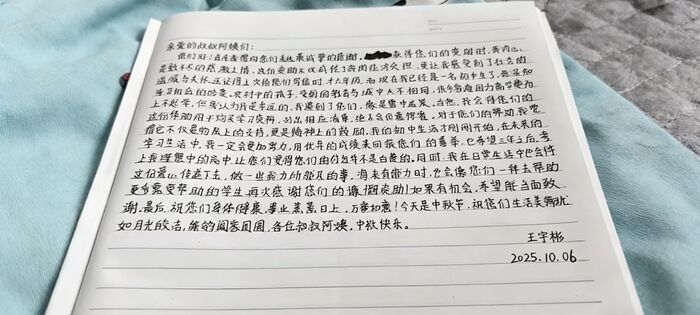
We never put this story in our brochures. But once in a while, a letter arrives. One girl wrote: “Auntie, our classroom finally has curtains.
When the sun no longer glared off the blackboard, it suddenly struck me that the most beautiful things in the world are free—like sunlight, and the right to see it clearly.”
The day we read that letter, the workshop was especially quiet. Old Chen just rested his hand on the fabric beside him and said nothing.
But we all understood—the cloth we handle, cut, and sew every day, the cloth destined to become part of someone’s home, is also,
in some unseen way, participating in the life of a young person we may never meet.
So, returning to the first question: what is a curtain, really?
It is a piece of fabric, a medium for light and shadow, an expression of a home. But perhaps, it can be something more.
It is the moment you draw it open at dawn and light comes pouring in. It is the wholeness and peace you feel when you close it at night.
It is its silent presence on the wall, witnessing the mornings and evenings, the seasons of your family’s life.
And here with us, it has also become a form of security for over a hundred young people, sparing them from worrying too soon about tomorrow.
It is the clear view a girl now has of the words on her blackboard.
We have never tried to “sell” kindness. We simply believe that when a piece of cloth is treated with respect,
when a process is carried through with care, when a group of people does the same thing for twenty-five years—goodness will naturally grow from it, like grass rising from the earth in spring.
Old Chen retired recently. Before he left, he sewed one last curtain.
“Remember to tell the person who uses this curtain,” he said with a smile, “if the sun is particularly bright someday, let it stay open a little longer.
Fabric loves the smell of sunshine. And so do people.”Perhaps that is the answer: What we make are vessels to hold light. And light, in itself, is kindness.
May every window in your home hold just the right amount of light.And may the light that passes through classroom curtains illuminate many more young eyes.
— Notes from Foulola Curtains